Decoding Shifts in Viewer Habits: Drama Content Ascendance on Free High-Definition Platforms
Tina Schmid · Jul 20, 2026
Decoding Shifts in Viewer Habits: Drama Content Ascendance on Free High-Definition Platforms
Platform operators and content distributors have tracked measurable changes in how viewers allocate time across genres, with drama titles capturing larger shares of total watch hours on unrestricted high-definition services. Industry datasets compiled through mid-2026 reveal drama selections accounting for an increasing percentage of streams, particularly on sites that operate without subscription barriers or regional locks.
Data Patterns Emerging in 2026
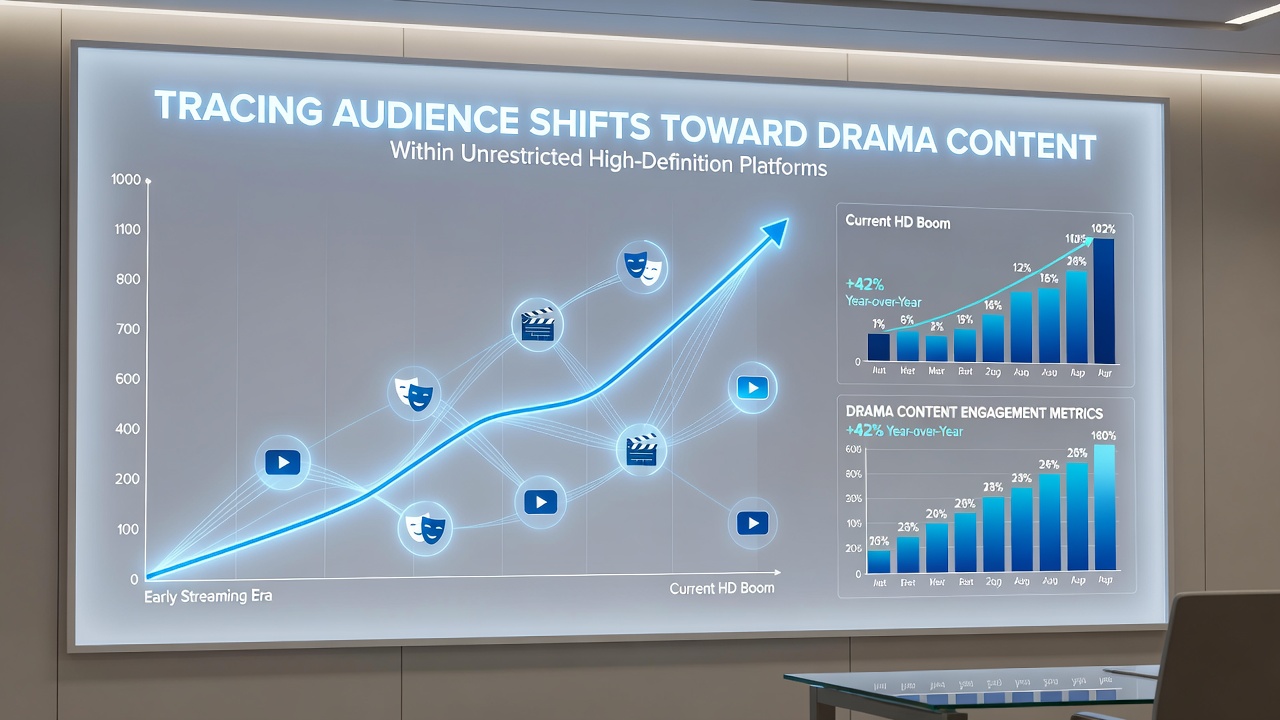
Figures released in July 2026 by multiple tracking services indicate drama consumption grew by double-digit margins compared with the same period in prior years, while action and comedy categories showed slower growth or slight declines in proportional time spent. Researchers at academic institutions analyzing viewer logs note that unrestricted platforms enable rapid sampling across catalogs, which appears to favor narrative-driven drama series and films that sustain longer engagement sessions.
One study compiled by European media analysts cross-referenced IP-based viewing records with genre metadata and found drama selections rising from roughly 28 percent to 37 percent of total streams between 2024 and 2026 on major free HD aggregators. The same analysis showed that users who began sessions with shorter clips frequently extended into full drama features once algorithmic suggestions surfaced character-focused titles.
Platform Characteristics Driving Genre Preferences
Unrestricted high-definition platforms typically index vast libraries updated daily, which reduces friction for discovering less-promoted drama content that traditional broadcasters might overlook. Viewers access these collections through standard browsers or dedicated apps, often without registration steps that might otherwise filter casual exploration. Data aggregators report higher completion rates for drama episodes when playback occurs in uninterrupted HD streams, a factor linked to the absence of mid-roll interruptions common on ad-supported linear channels.
Observers note that drama libraries on these platforms frequently include international productions subtitled in multiple languages, broadening appeal beyond domestic markets. A report issued by the Australian Communications and Media Authority documented increased cross-border traffic toward drama catalogs hosted on unrestricted domains, with Australian IP addresses showing elevated session durations for European and Asian drama series compared with locally produced action titles.
Viewer Behavior and Session Analysis
Session logs collected by platform analytics teams demonstrate that drama streams correlate with longer average viewing blocks, often exceeding ninety minutes per sitting. This pattern contrasts with shorter, fragmented consumption observed in other genres on the same services. Researchers attribute part of the difference to narrative structure, where serialized drama arcs encourage sequential playback within a single visit.
Geographic breakdowns reveal consistent trends across North American, European, and Asia-Pacific regions, although the rate of increase varies by local content availability. Canadian regulatory filings from 2025-2026 reference similar upticks in drama traffic on open platforms, prompting discussions about catalog diversity requirements for domestic services seeking to retain audiences.
Content Supply and Catalog Composition
Suppliers feeding unrestricted platforms have expanded drama acquisitions, responding to observable demand signals embedded in real-time usage statistics. Distributors report licensing additional drama back-catalogs specifically for high-definition encoding, anticipating continued migration toward story-centric programming. Metadata tagging improvements on several platforms now surface drama titles through refined recommendation engines that prioritize thematic continuity over action spectacle.
Trade associations tracking digital distribution note that drama productions often require lower per-minute bandwidth when encoded efficiently, allowing platforms to maintain high-resolution streams without proportional increases in hosting costs. This technical alignment supports sustained availability of drama libraries even as overall traffic volumes rise.
Conclusion
Longitudinal data through July 2026 documents a clear reallocation of viewing time toward drama content on unrestricted high-definition platforms, supported by session metrics, regional reports, and catalog expansion patterns. Continued monitoring by academic and regulatory bodies will determine whether these shifts stabilize or accelerate as platform interfaces and recommendation systems evolve further.