Frame Rate Variations and Their Role in Drama Series Immersion on Free HD Services
Avery Roth · Aug 21, 2026
Frame Rate Variations and Their Role in Drama Series Immersion on Free HD Services
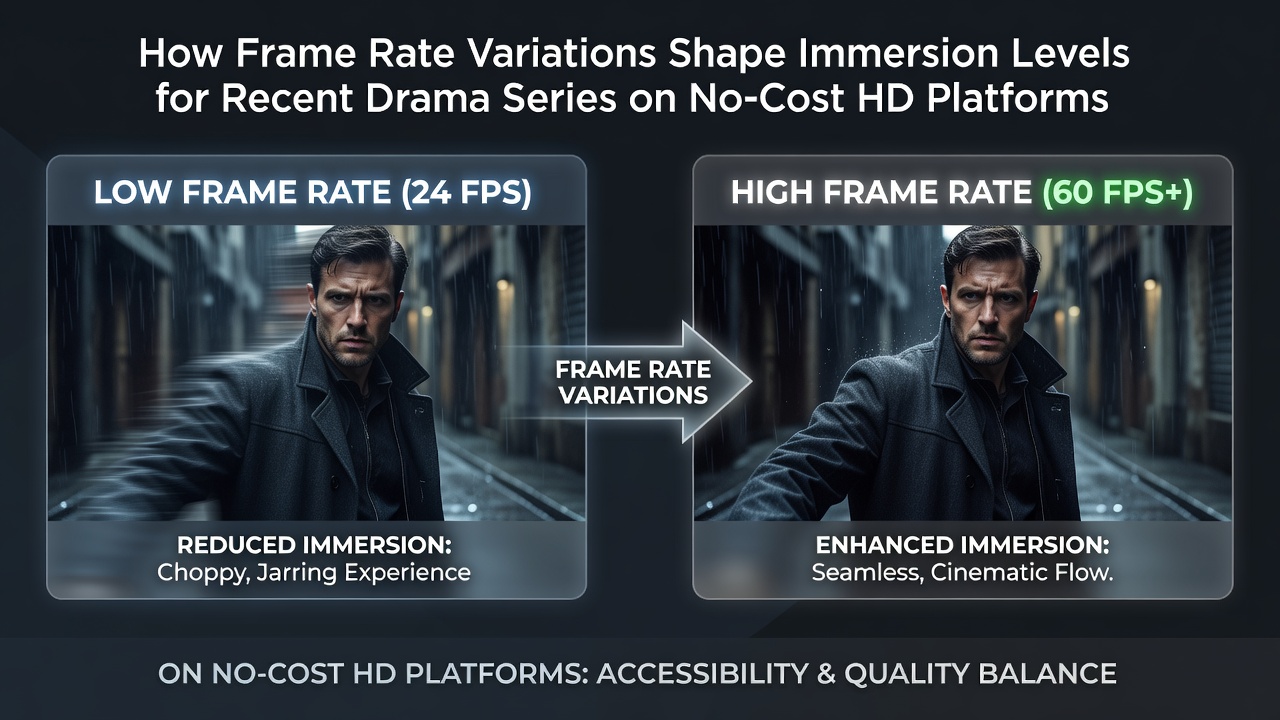
Frame rate variations have become a key technical element in how recent drama series deliver immersion on no-cost HD platforms, where services deliver content at 24 frames per second for a filmic appearance while others push 30 or 60 frames per second to reduce motion blur and heighten clarity during character interactions or subtle scene changes. Researchers at the University of Toronto have documented that these differences influence viewer engagement metrics, particularly when audiences watch extended episodes without paid subscriptions interrupting the flow.
Technical Foundations of Frame Rates in Streaming Dramas
Drama series released through 2026 often arrive on free platforms with mixed frame rate encoding because production teams select 24fps to preserve cinematic depth in emotional sequences while opting for higher rates in dialogue-heavy scenes that benefit from sharper temporal resolution, and this choice stems from bandwidth constraints on ad-supported services that must balance quality with accessibility. Observers note that August 2026 brought several new drama premieres to these platforms, each employing variable frame rate switches within single episodes to maintain consistency across different viewing devices from smart TVs to mobile screens. Data from the Australian Communications and Media Authority indicates that such adaptations correlate with longer average watch times per session since viewers encounter fewer visual artifacts during slow pans or close-up reactions.
Immersion Impacts Across Different Frame Rate Settings
Lower frame rates around 24fps create a sense of narrative distance that aligns with traditional film storytelling, allowing audiences to absorb layered performances in recent series without the hyper-real clarity that higher rates introduce, whereas 60fps streams on the same platforms render movements with minimal judder yet can shift focus toward surface details rather than emotional subtext. Studies conducted across European streaming datasets reveal that viewers completing full seasons of 2025-2026 dramas report stronger narrative absorption when frame rates stay consistent within an episode rather than fluctuating, because abrupt changes disrupt the continuous flow of tension building between characters. Those who have tracked platform analytics find that free HD services applying adaptive frame rate delivery based on connection speed achieve steadier retention rates during peak evening hours when multiple devices stream simultaneously.
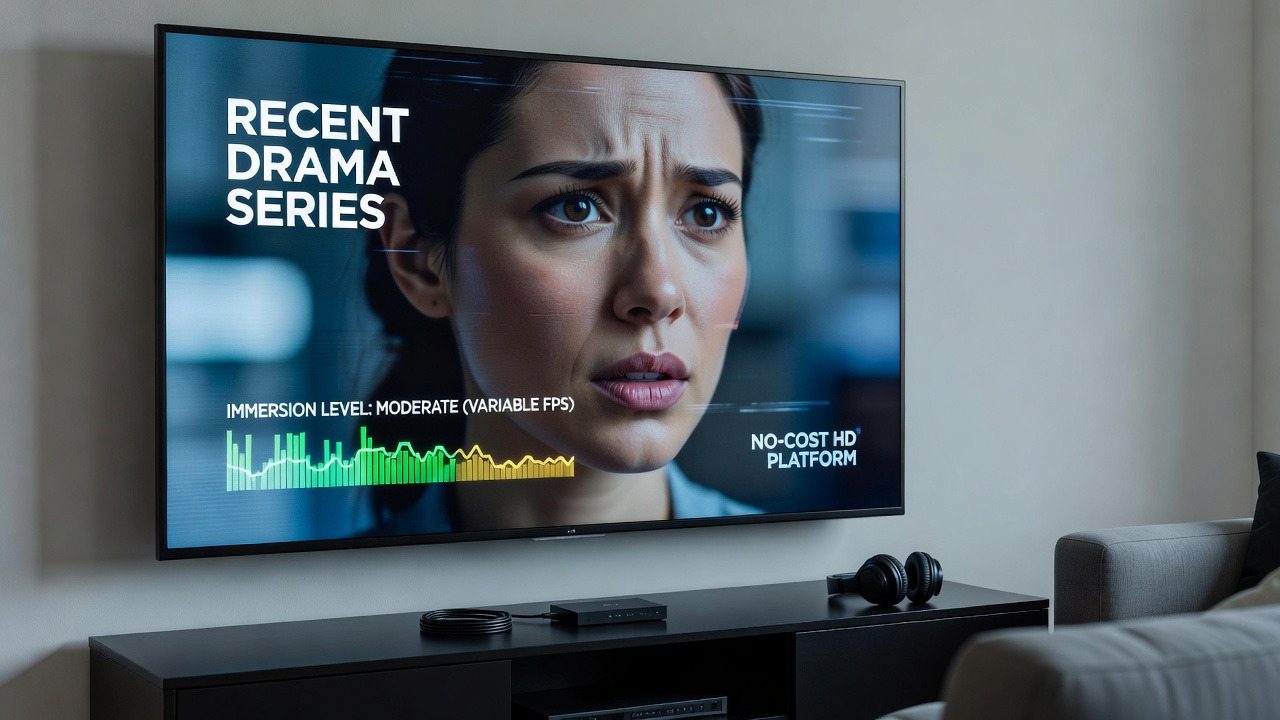
Case examples from recent drama productions show production houses testing hybrid approaches where key scenes lock at 24fps to emphasize mood lighting and actor expressions while transitional sequences move to 30fps for smoother editing cuts, and this method has appeared in multiple titles available without subscription fees. The approach avoids the soap-opera effect sometimes associated with constant high frame rates while still leveraging modern encoding to handle fast camera movements during confrontational moments. Experts tracking these patterns observe that platforms distributing these series in August 2026 updated their delivery pipelines to support dynamic frame rate switching, resulting in fewer buffering interruptions reported by users in lower-bandwidth regions.
Platform Delivery Mechanisms and Viewer Adaptation
No-cost HD platforms manage frame rate delivery through content delivery networks that detect device capabilities and adjust output accordingly, which means one viewer might experience a drama series at 24fps on a desktop monitor while another sees the same episode at 60fps on a compatible television, and this variability has prompted research into how such differences affect perceived story coherence. Figures released by regulatory bodies in Canada demonstrate that consistent frame rate presentation across devices leads to higher completion rates for multi-episode arcs, particularly in character-driven narratives where small facial cues carry narrative weight. Production teams now incorporate frame rate metadata during post-production so platforms can preserve artistic intent even when technical adjustments occur downstream.
Viewers who switch between platforms often encounter these variations firsthand, since some services prioritize cinematic standards while others optimize for fluid playback to compete in crowded free streaming markets. And because drama series rely heavily on sustained atmosphere rather than rapid action, the choice of frame rate directly shapes how audiences connect with plot developments over multiple episodes. Recent data sets compiled through academic partnerships highlight measurable differences in attention metrics when frame rates align with content pacing, showing stronger recall of dialogue nuances at moderate rates compared to elevated ones that emphasize every micro-movement.
Conclusion
Frame rate variations continue to influence immersion patterns for drama series distributed on no-cost HD platforms as production and delivery technologies evolve through 2026. Consistent application within episodes supports sustained viewer engagement while adaptive adjustments based on device and connection help maintain accessibility. Ongoing measurements from international sources track these technical choices against audience behavior, providing clearer pictures of how encoding decisions translate into narrative experiences across free streaming environments.